
Meaning & Appeal
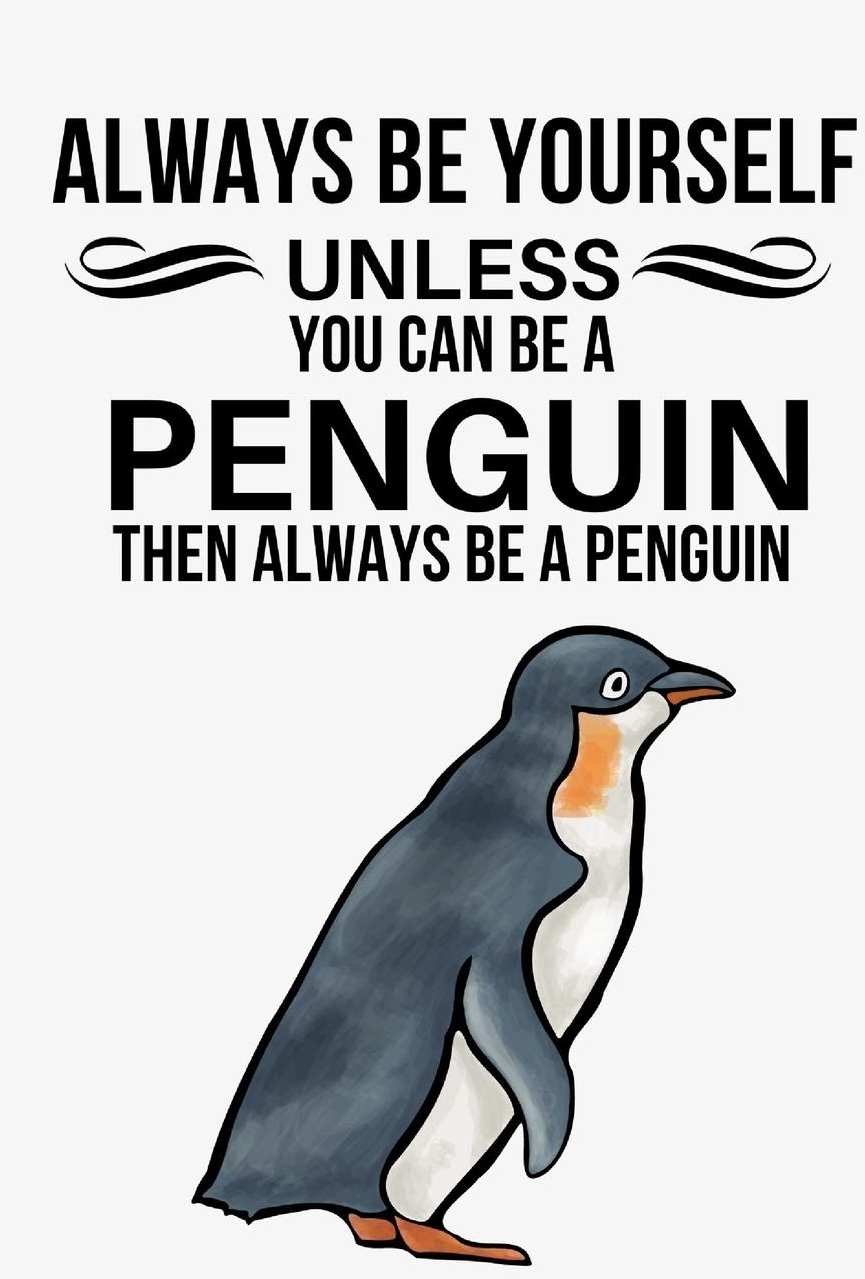
- Celebrating Individuality – The first part (“Always be yourself”) encourages authenticity and self-acceptance, reminding people to stay true to who they are.
- Whimsical Escape – The second part (“Unless you can be a penguin”) introduces humor and imagination, playfully suggesting that being a penguin would be even better. Penguins are often seen as adorable, resilient, and carefree creatures, making them a fun symbol of happiness.
- Encouraging Playfulness – The quote doesn’t take itself too seriously, reminding us that life doesn’t always have to be serious—sometimes, it’s okay to embrace silliness and wonder.
Why Penguins?
Penguins are beloved for their waddling walk, tuxedo-like appearance, and tight-knit social bonds. They evoke feelings of charm and lightheartedness, making them the perfect creature to represent a break from the ordinary.
Cultural Impact
The phrase has resonated with people who enjoy humor, animals, and a touch of absurdity in everyday life. It’s a reminder that while authenticity is important, so is joy—and if imagining yourself as a happy little penguin brings a smile, then why not?
Conclusion
This quote is more than just a funny saying—it’s a celebration of both self-acceptance and childlike wonder. Whether taken literally (as a fun fantasy) or metaphorically (as a reminder to embrace joy), it encourages people to find happiness in the simplest, quirkiest things.
DWJBH