
From Stadium to Symbol: The Football Fan Reviving Patrice Lumumba’s Legacy at AFCON
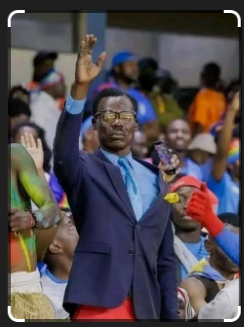
When the cameras panned across the stands during a tense Africa Cup of Nations match, they found a sight that stopped social media scrolling. Michel Kuka Mboladinga, a 53-year-old Congolese football fan, stood frozen in the crowd. Dressed sharply in bright-coloured suits, he held a silent, statuesque pose for the entire match, his right arm perpetually raised. The internet erupted not over a goal, but over a ghost—his face bore a striking resemblance to Patrice Lumumba, the Democratic Republic of the Congo’s first Prime Minister and a revolutionary martyr for African liberation.
Michel Kuka Mboladinga, known to fans as “Lumumba Vea,” became the unexpected story of AFCON 2025. His tribute was deliberate and powerful: he was emulating the memorial statue of Lumumba that stands in Kinshasa. Beyond a clever costume, his performance was an act of living memory, transforming the football stadium into a site of historical reflection for a continent.
A Flashback to Revolution: Who Was Patrice Lumumba?
To understand the weight of Mboladinga’s silent protest, one must revisit the man he channels. Patrice Lumumba was born in 1925 in the brutally exploited Belgian Congo. He rose to lead the independence movement, becoming the nation’s first Prime Minister in 1960. His defining moment was an unflinching independence day speech where, in front of the Belgian King Baudouin, he condemned decades of colonial oppression, racism, and exploitation.
His vision was clear: political independence was meaningless without economic sovereignty over Congo’s vast mineral wealth. This stance made him a target. Within months, his government was destabilised, and in January 1961, he was assassinated in a crime involving Belgian and Western intelligence agencies. His body was dissolved in acid in a literal attempt to erase him from history. Yet, as Mboladinga proves, some memories are indelible.
The Stadium as a Stage for Unfinished History
Mboladinga’s performance resonated because Lumumba’s struggle feels painfully current. The DRC remains rich in minerals like cobalt and copper, essential for smartphones and electric vehicles, yet it suffers from external interference, conflict, and poverty. For many watching, the fan’s solemn figure was a stark contrast to the celebratory football atmosphere, a quiet reminder of an unfinished liberation.
The power of the act lay in its accessibility and symbolism. For a generation that may not encounter Lumumba in school curricula, a viral football moment became a gateway to history. As one sports journalist noted, Mboladinga was “bringing visibility to a historic figure who fought for Congo’s independence.”
From Viral Moment to Continental Dialogue
The story took an emotional turn when DR Congo was eliminated from AFCON by Algeria after a heartbreaking 119th-minute goal. A video showed Algerian forward Mohamed Amoura running to the Congolese fans, mimicking Mboladinga’s pose and falling down in celebration. The gesture backfired spectacularly, sparking widespread criticism on social media for disrespecting a symbol of pan-African solidarity.
Amoura later apologised, stating he was unaware of the gesture’s historical meaning. In a remarkable act of sportsmanship, the Algerian Football Association invited Mboladinga to their team hotel. There, he was given a personalised Algerian jersey with “Lumumba” printed on the back—a gesture that transformed a moment of rivalry into one of respect and shared memory.
The Legacy Lives On
Though heartbroken by his team’s loss, Mboladinga left the tournament a hero. He demonstrated how popular culture and sports can be powerful vessels for history. His silent statue did not just honour a man killed over six decades ago; it asked pressing questions about sovereignty, memory, and resource justice in Africa today.
As the AFCON tournament continues, the image of “Michel Kuka Mboladinga” standing motionless in the stands will linger. It proves that true icons cannot be dissolved by acid or erased by time. Their legacy waits in the crowd, ready to be revived by a fan with a deep sense of history and a perfectly still right arm.